Weed, Ring Lights and Mid-Point Talking: Has the US Open Become Too Distracting?
The US Open has always been tennis with the volume turned up.
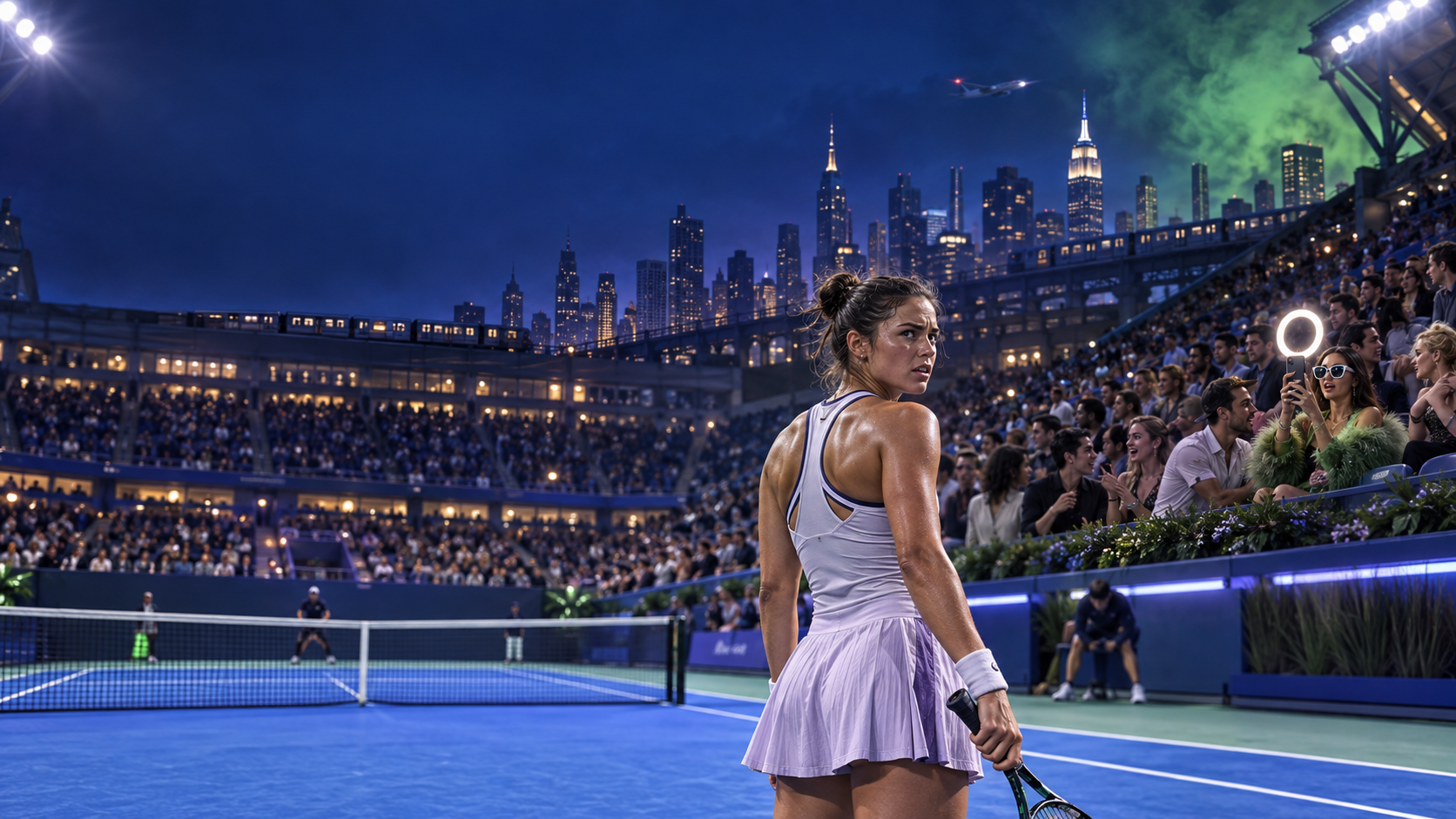
Trains rumble beside the grounds. Planes descend toward LaGuardia. Music fills the walkways. Spectators move between courts while vendors, broadcasters and thousands of conversations create a constant background hum. Under the lights, Arthur Ashe Stadium can feel less like a traditional tennis venue and more like the center of New York nightlife.
That energy is part of the tournament’s identity. Wimbledon has its traditions, Roland Garros has its red clay, and the Australian Open sells a more relaxed summer atmosphere. The US Open offers intensity, unpredictability and a crowd that does not always wait for permission to become involved.
But at the 2026 tournament, the distractions have begun to feel different.
Cannabis odors have drifted toward the courts. A spectator’s bright ring light interrupted the atmosphere during a Naomi Osaka match. Groups have filmed themselves while play was taking place. Players and serious fans have complained about movement, conversations and people who appear more interested in creating content than watching the competition.
The real debate is not whether the US Open should become quieter.
It is whether the tournament can remain unmistakably New York without allowing the spectacle surrounding the tennis to become more important than the tennis itself.
“Grow the audience, celebrate the atmosphere—but never make the match background scenery.”
When the Smell of New York Reaches the Court
Aryna Sabalenka briefly stopped during her third-round victory over Kamilla Rakhimova after detecting a strong cannabis odor around Louis Armstrong Stadium. She informed the chair umpire and later suggested that people could relax however they wanted—just not close enough to distract players trying to compete.
Jessica Pegula supported the larger concern about respecting the match environment, while Adrian Mannarino, Katie Boulter and Francesca Jones were among the other players who reportedly noticed cannabis smells around the tournament.
Recreational cannabis may be legal in New York, but the USTA Billie Jean King National Tennis Center is officially smoke-free. Smoking, vaping and electronic smoking devices are prohibited on the grounds. The complication is that an odor can travel from surrounding areas, particularly when the wind shifts. Security can enforce rules inside the complex, but it cannot place an invisible wall around every court.
This might sound like a minor inconvenience, but elite tennis depends upon extremely precise sensory information. Players are tracking the ball, reading an opponent’s body position, controlling their breathing and making decisions in fractions of a second. An unexpected and persistent odor can break concentration, especially when a match is already physically and emotionally demanding.
The issue is not a moral judgment about cannabis. It is a workplace question. A tennis court is also the players’ workplace, and a Grand Slam match may determine rankings, prize money, sponsorship opportunities and the direction of a career.
Reuters reported on Sabalenka’s interruption and the tournament’s smoke-free policy.
The Ring Light That Lit Up a Larger Debate
The influencer controversy intensified during Naomi Osaka’s first-round match against Anastasia Zakharova. A spectator used a bright ring light to take pictures during play, while another group in a suite was seen energetically filming itself. The chair umpire eventually asked the people in the suite to sit down.
The videos spread quickly, and the online reaction was predictable: influencers were accused of turning the US Open into a social-media studio.
There is, however, an important distinction. According to ESPN’s reporting, the people involved in the viral incidents were not among the content creators officially credentialed by the USTA.
The tournament accredited approximately 100 creators in 2026, up from 54 the previous year. That number includes independent tennis creators and social-media personnel working for established media organizations. Approved creators submitted coverage plans and received formal guidelines governing access and content capture.
Lumping serious tennis creators together with every spectator recording a selfie is unfair. Some independent creators produce excellent player interviews, tactical analysis, tournament guides and behind-the-scenes coverage. They reach audiences that conventional sports media may never attract.
The problem is not the existence of influencers. It is disruptive behavior—regardless of whether the person causing it has 10 followers or 10 million.
Osaka offered the right balance. She welcomed people who can make tennis popular with new audiences while emphasizing that anyone attending a sporting event should understand and respect its basic etiquette.
Why Talking During a Point Is Different
Tennis has an unusual relationship with sound.
Basketball players shoot free throws while thousands of people scream. Baseball players attempt to hit a 95-mph fastball while crowds chant. Soccer players take penalties surrounded by whistles and abuse.
Tennis players generally expect relative silence while the ball is in play.
Is that tradition outdated? Perhaps tennis could tolerate more continuous crowd noise. Players routinely compete beside busy walkways on outer courts, and some thrive during loud Davis Cup or Billie Jean King Cup matches.
But consistent noise is different from sudden noise.
A steady crowd hum can disappear into the background. A shout, loud conversation, flash or ring light appearing just before contact can disrupt timing and attention. The difficulty is not necessarily volume; it is unpredictability.
Spectators do not need to remain silent throughout an entire match. They can talk between points, cheer after great rallies and bring personality to the stadium. The request is much simpler: when the server begins the motion, allow the point to belong to the players.
“Tennis does not require a silent audience. It requires an audience that understands when its moment ends and the players’ moment begins.”
Is the US Open Becoming a Victim of Its Own Success?
The US Open does not market itself only as a tennis tournament.
It promotes celebrity appearances, food, cocktails, fashion, luxury suites, sponsor activations and shareable experiences throughout the grounds. That approach has helped turn the tournament into one of New York’s major cultural events.
It has also attracted visitors who may know very little about tennis.
That is not necessarily a failure. New spectators are how a sport grows. Every knowledgeable fan once attended a first match. Expecting newcomers to understand every unwritten tradition without guidance is unrealistic.
The tournament therefore has two responsibilities: invite new audiences and teach them how to participate.
The USTA increased signage after the early controversy and reminded ticket and suite holders to avoid flash photography, ring lights and other disruptive activities. Those are useful steps, but fan education could begin much earlier.
Ticket confirmations could include a 30-second animated etiquette guide. Stadium screens could display short, entertaining reminders before matches. Ushers could give clear instructions without making newcomers feel unwelcome. Creators receiving access could be encouraged to publish “How to Attend Your First Tennis Match” videos.
Tennis should not turn etiquette into a test designed to exclude people. It should make the rules easy to understand.
Creators Can Help Solve the Problem
The best creators are not a threat to tennis. They may be part of the solution.
A fashion creator can explain why tennis apparel has become culturally influential. A food creator can introduce followers to the US Open experience. A tactical analyst can show why a return position changed a match. A personality-driven creator can help fans care about a player they previously did not know.
All of this adds value when it leads the audience back to the sport.
The strongest tennis content does not merely announce, “Look at me at the US Open.” It communicates, “Look what I discovered at the US Open.”
That small change in perspective separates participation from self-promotion.
Organizers could support responsible creators with designated filming areas, access to practices and press opportunities that do not interfere with matches. In return, creators should accept clear restrictions on lighting, movement and filming during points.
Loud Is Not the Same as Disrespectful
The answer is not to turn Flushing Meadows into Wimbledon.
The chants, night-session electricity and unpredictable crowd reactions are among the things that make the US Open special. Players who win in New York must manage more than forehands and backhands. They must manage noise, momentum and an audience capable of changing the emotional temperature of a match.
That atmosphere should be protected.
But protecting the atmosphere also means distinguishing excitement from disregard. Cheering a brilliant point contributes to the event. Holding up a ring light during a rally does not. Introducing tennis to new followers helps the game. treating a professional match as background scenery does not.
New York does not need to become quiet.
It simply needs to know when to listen.
“The US Open should remain loud, colorful and slightly chaotic. But when the ball is in play, the spectacle must give the court back to the competitors.”

Rich Benvin
Big Tennis contributor. Founder Rich Benvin is a former ATP pro, WTA coach and CEO of Mass Density, Inc. About Big Tennis →
Enjoyed this? Get the weekly Big Tennis recap.
Free weekly tennis news, coaching tips, drills and games — plus Teo Davidov updates. Pick what you want; unsubscribe anytime.