THE INNER GAME
Win the Match Inside Your Head First
At every level I have coached, from juniors to the tour, the same truth shows up: when two players have similar strokes, the one who manages their mind wins. Tennis gives you no clock, no teammates and no substitutions. You are alone out there with your thoughts for every second between points. The good news is that mental toughness is not a personality trait you either have or lack. It is a set of skills, and skills can be trained.
BELIEF YOU CAN BUILD
Confidence: Earned, Not Wished For
Real confidence comes from evidence. When you have hit a thousand second serves under pressure in practice, you have a reason to trust it at 5–5 in the third. Positive thinking helps, but proof is what holds up.
Prepare deliberately
Practice the shots you will need in matches, under some pressure: games to 7, consequences for misses, scoring every drill.
Collect wins
Write down what went well after every session in your tennis journal. Confidence grows from a record you can reread.
Act the part
Shoulders back, eyes up, purposeful walk. Your body language influences your opponent and your own nervous system.
ATTENTION IS A SKILL
Focus: Play the Point in Front of You
Your mind wants to time-travel: back to the easy forehand you missed, forward to serving for the match. Neither helps. Strong focus is the ability to notice that you have drifted and bring yourself back quickly. Give your attention something simple and concrete during the point: the seams of the ball, the sound of contact, your target. Between points, your focus can widen to tactics, then narrow again before you serve or return.
THE 25 SECONDS THAT DECIDE MATCHES
The Between-Point Routine: The 4 R’s
Points last seconds; the time between them is far longer. What you do in that window determines how you play the next point. Sport psychologists have long taught versions of this four-stage routine. Rehearse it in practice until it runs on autopilot.
- Response. Right after the point ends, give yourself a quick, controlled reaction. Good point: a short fist pump or “come on.” Bad point: a neutral reset, such as turning away and switching your racket to the non-dominant hand. Keep it brief; the point is over.
- Relax. Walk slowly toward the back of the court, adjust your strings, and take one or two slow breaths with a long exhale. Let your shoulders drop and loosen your grip. This is where your heart rate comes down.
- Refocus. Check the score and situation, then decide on a simple plan for the next point: where you will serve, or how you will return. Make it specific and positive, such as “body serve, then forehand to the open court.” If you keep losing the same way, this is where you make a small tactical change.
- Ritual. Step to the line and run the same pre-serve or pre-return routine every time: a set number of bounces, a breath, a look at your target. The ritual signals your body that it is time to play and blocks out stray thoughts.
YOUR BUILT-IN CALM BUTTON
Breathing Techniques for Tennis
Breathing is the fastest tool you have to influence your nervous system, and you can use it in the middle of a match without anyone noticing. Slow exhales in particular tend to calm the body.
Box breathing
Inhale through the nose for 4 counts, hold for 4, exhale for 4, hold for 4. Repeat three or four rounds. Ideal at changeovers, before a match, or the night before a big day.
Physiological sigh
Take a full inhale through the nose, add a second short “top-up” inhale, then make a long, slow exhale through the mouth. One to three of these between points can take the edge off a racing heart.
Practice both off court first so they are familiar under pressure. You can also exhale audibly through contact on your strokes, which keeps your body loose.
WHAT YOU SAY MATTERS
Self-Talk Scripts
You talk to yourself all match long. Make that voice a coach, not a critic. Short, instructional or encouraging phrases work best. Pick a few, write them down, and use them on purpose.
| Situation | Instead of… | Try… |
|---|---|---|
| After an unforced error | “You always miss that.” | “Next ball. Higher over the net.” |
| Down a break | “This is over.” | “One point at a time. Make them earn it.” |
| Serving for the set | “Don’t double fault.” | “Smooth toss, loose arm, hit up.” |
| Opponent on a hot streak | “They’re too good today.” | “Stay solid. Hot streaks cool off.” |
| Feeling tight | “Why am I so nervous?” | “Breathe out. Nerves mean I care.” |
BIG POINTS
Handling Nerves & Pressure Points
Nerves are not a problem to eliminate. They are energy that tells you the moment matters. The physical feelings of excitement and anxiety are remarkably similar; what changes is the story you tell about them. Try reframing “I’m nervous” as “I’m ready.”
- Have a pressure-point plan. Decide in advance your go-to serve and your highest-percentage pattern for break points and tiebreaks.
- Play with margin, not fear. Aim a little higher over the net and a little inside the lines. Swing through; do not push the ball.
- Slow down. Use the full time allowed. Rushing is the most common sign of nerves.
- Commit. A decisive shot to a sound target beats a hesitant “perfect” one.
- Practice pressure. Play practice games starting at 30–40 or deuce so tight scores feel normal.
RESILIENCE
Comebacks & Handling Losses
When you are behind
- Shrink the scoreboard: win the next point, then the next game.
- Make your opponent play more balls; extend rallies.
- Change one thing: pace, height, position or serve location.
- Use changeovers to reset with a breath and a fresh plan.
- Remember that leads feel heavy; the other player is often more nervous than you think.
After a loss
- Feel it, but set a time limit on dwelling.
- Within a day, write three things that worked and one or two things to improve.
- Separate performance from outcome: you can play well and lose.
- Turn lessons into specific practice goals for the week.
- Your result is a moment; your identity is not on the scoreboard.
Every loss is tuition. Pay attention in class and you will not have to pay it twice.Big Tennis coaching principle
TRAIN ATTENTION DAILY
Meditation for Tennis: A 5-Minute Routine
Meditation is focus training. Each time your mind wanders and you bring it back, you practice the exact skill you need after a missed overhead. Five minutes a day is plenty to start.
- Minute 1: Settle. Sit tall, eyes closed or soft. Take three slow breaths with long exhales.
- Minute 2: Breath focus. Breathe naturally and count each exhale from one to ten, then start over. When you lose count, notice it and start again without judgment.
- Minute 3: Body scan. Move your attention from feet to head. Notice tension in the jaw, shoulders and hands, and let it soften.
- Minute 4: Sound and space. Widen your attention to the sounds around you, just like widening your view between points.
- Minute 5: Intention. Picture yourself walking onto court calm and alert. Set one intention for your next practice or match.
Ready for more? Pair meditation with guided imagery on our Tennis Visualization page.
PRACTICE IT LIVE
Mindfulness on Court: Four Drills
Mindfulness is easiest to learn while you are hitting, because the ball gives your attention a natural anchor. Use these in warm-ups or practice sets.
Bounce-hit
Say “bounce” out loud when the ball lands and “hit” at the moment of contact. It keeps your eyes and mind on the ball and quiets technical overthinking. A classic for good reason.
Sound check
Rally for five minutes paying attention only to the sound of contact. Clean, centered hits sound different. Let your body adjust without forcing it.
Breath and feet
Between rally balls, notice your breathing and the feel of your feet on the court. Light, bouncing feet usually mean a relaxed mind.
Label and let go
When a thought pops up during play (“I’m missing too much”), silently label it “thinking,” then return to the ball. You are training the reset, not trying to stop thoughts.
Common mental mistakes and quick fixes
- Rushing after errors: walk to the back fence before every point you lost.
- Playing the score: say your plan for the next point out loud, quietly, instead of the score.
- Tightening when ahead: keep swinging through the ball; protecting a lead usually loses it.
- Reacting to bad calls: handle it calmly and correctly under the rules, then use your Relax step.
- Comparing yourself to the opponent: bring your attention back to your own process goals.
Handling gamesmanship and distractions
Slow play, chatter or questionable tactics are designed to get inside your head. Know the rules, ask politely for an official if one is available and needed, and keep your own routine. The calmer you stay, the less these tactics work. Treat distractions as something to notice and let pass, like wind or sun.
MINDFULNESS ON COURT
Zen Tennis Principles
Mindfulness on court simply means paying full attention to what is happening right now, without piling judgments on top of it. Many coaches have drawn on this idea, and it remains one of the most practical ways to quiet an overactive mind.
Watch, don’t judge
Observe where the ball lands rather than labeling the shot “terrible.” Information corrects; judgment tightens.
Trust the body
You trained the stroke. In matches, let it happen instead of micromanaging the mechanics.
Beginner’s mind
Approach each point fresh, curious about what will happen, free of the last one.
Process over outcome
Focus on what you control: effort, preparation, choices and attitude. The score follows.
SHOW UP READY
Pre-Match Routine Checklist
- The night before: pack your bag (rackets, grips, strings, shoes, water, snacks, towel, spare clothes) and check the start time and location.
- Sleep on a normal schedule; avoid late screens.
- Eat your tested pre-match meal about three hours out (see Fitness & Nutrition).
- Review your game plan and any scouting notes in your tennis journal.
- Do a few minutes of visualization: first serve, first return, a tough point handled well.
- Complete your dynamic warm-up and get your heart rate up before you step on court.
- Run three rounds of box breathing, then set one process goal for the match.
- Walk on with confident body language. You are ready.
Try Guided Visualization Open Your Tennis Journal
Headspace
Guided meditation and focus exercises for calmer matches.
Visit headspace.com ↗Mind & Mental ToughnessBetterHelp
Online counseling with licensed therapists.
Visit betterhelp.com ↗Mind & Mental ToughnessMindvalley
Courses on focus, meditation and peak performance.
Visit mindvalley.com ↗Mind & Mental ToughnessCalm
Sleep stories, breathing and meditation for recovery.
Visit calm.com ↗Partner links: Big Tennis may earn a commission at no extra cost to you. Disclosure.
Latest from the Mental Game
More articles →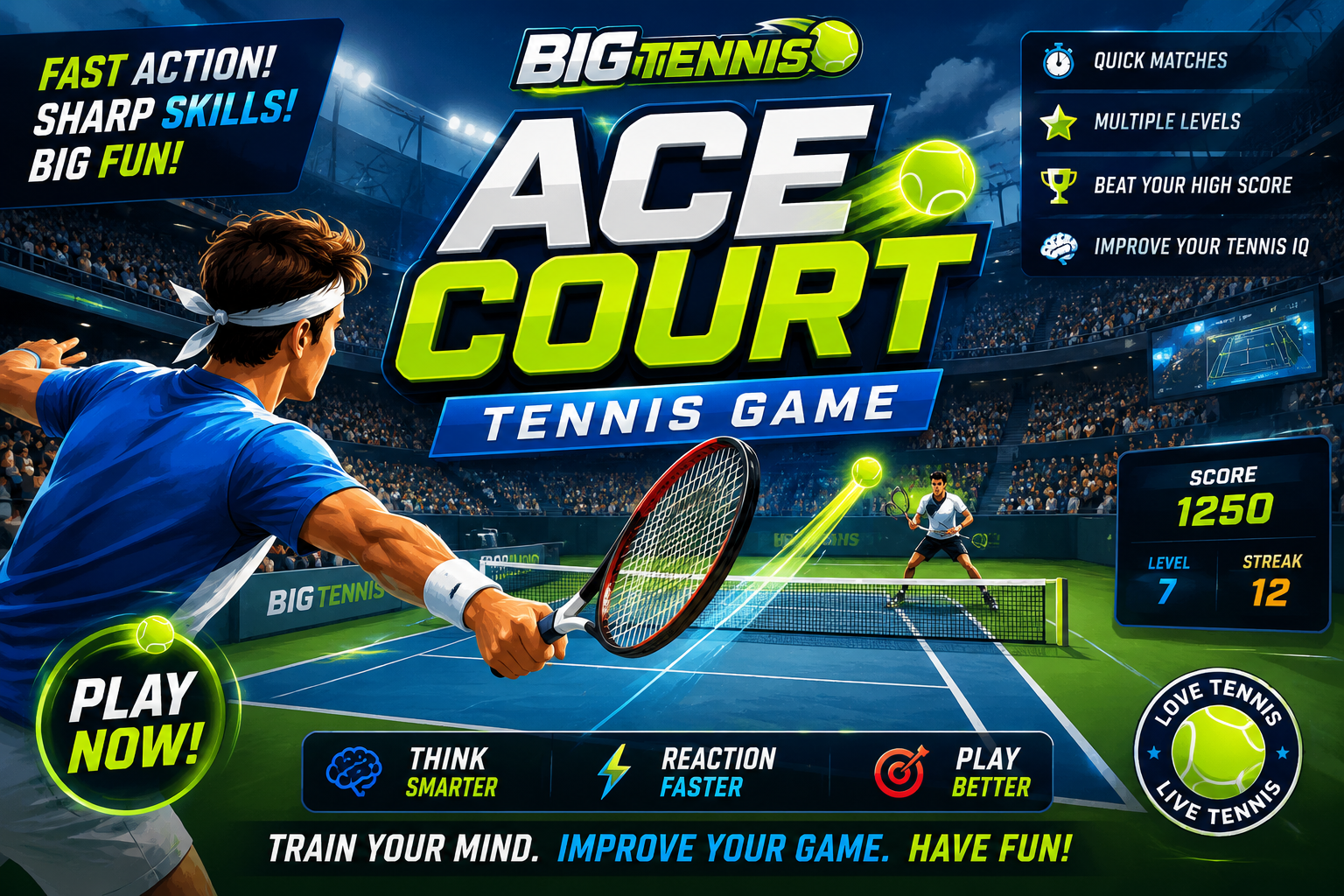
Ace Court Tennis Game: The Fastest Way to Test Your Tennis Skills
Ace Court Tennis Game: The Fastest Way to Test Your Tennis Skills Think your tennis IQ is as sharp as…
Wimbledon, Jannik Sinner, and the Anti-Doping Dilemma Facing Modern Tennis
Wimbledon, Jannik Sinner, and the Anti-Doping Dilemma Facing Modern Tennis Tennis is entering one of its most fascinating stretches of…

Teo Davidov Earns First ATP Points With Breakthrough Semifinal Run in Naples
Teo Davidov Makes History in Naples — First ATP Points & Semifinal Run At just 15 years old, Teodor “Teo”…

How Tennis Players Really Improve (And Why Most Never Do)
How Tennis Players Really Improve (And Why Most Never Do) If you’ve been around tennis long enough, you’ve seen it…
Mental-toughness tips in your inbox
Free weekly tennis news, coaching tips, drills and games — plus Teo Davidov updates. Pick what you want; unsubscribe anytime.