FROM CLOISTERS TO CENTRE COURT
Nine centuries of chasing a ball
Every time you step on court, you’re joining a story that started with monks hitting a ball with their bare hands in medieval France. Tennis has survived royal scandals, a split between amateurs and pros, a long exile from the Olympics and a complete equipment revolution, and it keeps getting better. Here’s the whole journey, told the way I’d tell it to a player sitting courtside between drills.
INTERACTIVE TIMELINE
Tennis history at a glance
Scroll through the milestones that shaped the game, from palm-ball in the cloisters to the Alcaraz–Sinner era. Each marker is color-coded by the surface or stage where it happened.
- 1100sOrigins
Jeu de paume in the cloisters
Monks in northern France begin swatting a ball back and forth with the palm of the hand, often using monastery walls and sloping roofs as part of the court. The game, jeu de paume ('game of the palm'), spreads to the nobility and eventually adopts gloves, then paddles, then strung racquets.
- 1500sOrigins
Real tennis becomes the sport of kings
Indoor courts multiply across France and England, and the game we now call real tennis becomes a royal obsession. Henry VIII was a keen player, and the court at Hampton Court Palace is still in use today, making it one of the oldest active sporting venues in the world.
- 1859Origins
Gem and Perera take the game outdoors
In Edgbaston, Birmingham, solicitor Major Harry Gem and his friend Augurio Perera start playing a racquet-and-ball game on a croquet lawn, blending ideas from rackets and the Basque game of pelota. It is one of the earliest recorded forms of lawn tennis.
- 1872Origins
First lawn tennis club in Leamington Spa
Gem and Perera move to Leamington Spa and, with two local doctors, found what is widely regarded as the world's first lawn tennis club. The outdoor game is beginning to find an organized home.
- 1874Origins
Wingfield patents Sphairistikè
Major Walter Clopton Wingfield patents a boxed set for a game he calls Sphairistikè, played on an hourglass-shaped court. The kits sell quickly across Britain and beyond, and his marketing helps turn lawn tennis into a national craze.
- 1877Amateur Era
The first Wimbledon
The All England Croquet Club adds 'Lawn Tennis' to its name and stages its first Championship, a men's singles event won by Spencer Gore. The organizers settle on a rectangular court and borrow real tennis scoring, creating rules that look surprisingly familiar today.
- 1881Amateur Era
US Championships launch at Newport
The newly formed U.S. National Lawn Tennis Association holds its first national championship at the Newport Casino in Rhode Island. Richard Sears wins the first of seven straight titles.
- 1884Amateur Era
Women arrive at Wimbledon
Wimbledon adds a ladies' singles event, won by Maud Watson, along with men's doubles. Three years later, in 1887, the U.S. women's championship begins in Philadelphia.
- 1891Amateur Era
French Championships begin
France stages its national championships, initially open only to members of French clubs. The event opens to international players in 1925 and evolves into today's Roland-Garros.
- 1900Amateur Era
Dwight Davis launches a team cup
Harvard player Dwight Davis donates a silver bowl for an international team competition, first contested between the United States and the British Isles in Boston. The Davis Cup becomes the sport's premier men's team event.
- 1905Amateur Era
The Australasian Championships
The championship that becomes the Australian Open is first held in Melbourne, with Rodney Heath the first men's champion. For decades it rotates between Australian cities and occasionally New Zealand.
- 1913Amateur Era
A governing body is born
National associations meet in Paris to found the International Lawn Tennis Federation. Today's International Tennis Federation (ITF) dropped 'Lawn' from its name in 1977.
- 1922Amateur Era
Wimbledon moves to Church Road
The Championships relocate from Worple Road to the club's current home on Church Road, with a new Centre Court. The same year, the old Challenge Round, which gave the holder a bye to the final, is scrapped.
- 1924Amateur Era
Tennis leaves the Olympics
After the Paris Games, a dispute over amateurism and control between the ILTF and the IOC drops tennis from the Olympic program. It returns as a demonstration sport in 1968 and 1984, then as a full medal sport in 1988.
- 1928Amateur Era
Stade Roland-Garros opens
Paris builds a new stadium to defend the Davis Cup won by France's 'Four Musketeers', naming it after World War I aviator Roland Garros. The red clay venue becomes the permanent home of the French Championships.
- 1938Amateur Era
Budge completes the first Grand Slam
American Don Budge wins all four major singles titles in a single calendar year, the first player to do so. Maureen 'Little Mo' Connolly becomes the first woman to achieve the feat in 1953.
- 1950Amateur Era
Althea Gibson breaks the color barrier
With strong public backing from former champion Alice Marble, Althea Gibson becomes the first Black player to compete at the U.S. National Championships. It opens a door that had been firmly shut.
- 1956Amateur Era
Gibson wins a major
Althea Gibson captures the French Championships singles title, becoming the first Black player to win a Grand Slam singles crown. She follows it with back-to-back Wimbledon and U.S. titles in 1957 and 1958.
- 1963Amateur Era
The Federation Cup
To mark its 50th anniversary, the ILTF launches a women's team competition in London, won by the United States. It is known today as the Billie Jean King Cup.
- 1968Open Era
The Open Era begins
After years of pressure, the majors finally allow professionals and amateurs to compete side by side. The British Hard Court Championships in Bournemouth becomes the first open event, and Roland-Garros the first open major.
- 1969Open Era
Laver's second Grand Slam
Rod Laver sweeps all four majors in the same year for the second time, having first done it as an amateur in 1962. He remains the only player to complete the calendar Grand Slam in the Open Era on the men's side.
- 1970Open Era
Tiebreaks and the Original 9
The US Open becomes the first major to use a tiebreak, Jimmy Van Alen's sudden-death format. That September, nine women sign symbolic one-dollar contracts with Gladys Heldman, launching the tour that would become the WTA. Wimbledon adopts its own tiebreak in 1971.
- 1972Open Era
The ATP is formed
Male professionals create the Association of Tennis Professionals to give players a collective voice. A year later, 81 members boycott Wimbledon in support of Nikola Pilić, showing the new union's muscle.
- 1973Open Era
The landmark year
Billie Jean King founds the WTA in June, the US Open offers equal prize money, and King beats Bobby Riggs in the Battle of the Sexes at the Houston Astrodome. In August the ATP computer rankings debut, with Ilie Năstase the first No. 1.
- 1975Open Era
Ashe conquers Wimbledon
Arthur Ashe outthinks Jimmy Connors in the final to become the first Black man to win Wimbledon. In November, Chris Evert becomes the first No. 1 in the WTA computer rankings.
- 1976Open Era
Wheelchair tennis is born
Brad Parks, an acrobatic skier paralyzed in an accident, begins experimenting with wheelchair tennis in California alongside Jeff Minnenbraker. The two-bounce rule makes the game possible, and the sport grows worldwide.
- 1978Open Era
US Open moves to Flushing Meadows
After three years on clay at Forest Hills, the US Open moves to the new USTA National Tennis Center and switches to hard courts. Jimmy Connors wins, becoming the only player to win the event on grass, clay and hard.
- 1980Open Era
Borg–McEnroe and the graphite age
Björn Borg beats John McEnroe in a Wimbledon final remembered for its 18–16 fourth-set tiebreak. Meanwhile, graphite and composite racquets begin replacing wood, and within a few years wooden frames vanish from the pro game.
- 1988Open Era
Graf's Golden Slam
Steffi Graf wins all four majors plus Olympic gold at Seoul, where tennis returns as a full medal sport. The Australian Open also moves from grass at Kooyong to hard courts at the new Flinders Park.
- 1990Open Era
The ATP Tour era
Players take greater control of the men's circuit as the ATP Tour launches, creating the tournament tiers that evolved into today's Masters 1000, 500 and 250 events.
- 2001Open Era
Wildcard fairy tale
Goran Ivanišević, ranked outside the top 100, wins Wimbledon as a wildcard in a famous Monday final. The same year, the Australian Open becomes the second major, after the US Open, to pay men and women equally.
- 2003Modern Era
Federer's first major
Roger Federer wins Wimbledon for his first Grand Slam title, launching an era of dominance. Rafael Nadal (2005) and Novak Djokovic (2008) soon join him, forming the 'Big Three'.
- 2006Modern Era
Hawk-Eye challenges arrive
Player challenges using Hawk-Eye ball tracking debut on tour in Miami and at a major at the US Open. Fans quickly embrace the clap-along replays.
- 2007Modern Era
Equal pay at Wimbledon
After years of advocacy led by Venus Williams and the WTA, Wimbledon pays men and women equally, completing equal prize money across all four majors. Fittingly, Venus wins the title.
- 2008Modern Era
The greatest final?
Nadal beats Federer 9–7 in the fifth set at Wimbledon in a final that ends in near-darkness after rain delays. Many still rank it the finest match ever played.
- 2009Modern Era
A roof over Centre Court
Wimbledon's retractable Centre Court roof is used for the first time during the Championships, ending the era of total rain dependence on the main stage.
- 2010Modern Era
Isner–Mahut: 11 hours
John Isner beats Nicolas Mahut 70–68 in the fifth set at Wimbledon in a first-round match spread across three days. It lasted 11 hours and 5 minutes, still the longest in tennis history.
- 2017Modern Era
Serena's 23rd
Serena Williams wins the Australian Open over sister Venus for her 23rd major singles title, the Open Era record. She later revealed she was pregnant during the tournament.
- 2019Modern Era
Final-set tiebreak at Wimbledon
Wimbledon introduces a tiebreak at 12–12 in the final set, and the men's final between Djokovic and Federer becomes the first to use it. The decision ended the marathon open-ended fifth sets made famous by matches like Isner–Mahut.
- 2022Modern Era
One tiebreak rule for all majors
The four Grand Slams adopt a unified 10-point tiebreak at 6–6 in the deciding set, and the ITF World Tennis Number, a single 40-to-1 rating for every player, rolls out across many nations including the US. Federer and Serena Williams both play their final matches this year.
- 2023Modern Era
Djokovic reaches 24
Novak Djokovic wins the US Open for his 24th Grand Slam singles title, the most by any man in history, matching Margaret Court's all-time record.
- 2024Modern Era
A new generation takes over
Jannik Sinner wins his first major in Melbourne and Carlos Alcaraz wins Roland-Garros and Wimbledon, splitting all four men's majors. Djokovic finally wins Olympic gold in Paris, and Rafael Nadal retires at the Davis Cup Finals.
- 2025Modern Era
Electronic calls at Wimbledon
Wimbledon replaces line judges with electronic line calling for the first time in its history. Alcaraz beats Sinner in a five-and-a-half-hour Roland-Garros final after saving championship points, and Sinner answers by winning Wimbledon.
- 2026Modern Era
Alcaraz completes the Career Slam
Carlos Alcaraz beats Djokovic in the Australian Open final to become the youngest man to win all four majors. Alexander Zverev then breaks through with his first major at Roland-Garros and adds the US Open.
ORIGINS
From jeu de paume to lawn tennis
The earliest ancestor of tennis appears in twelfth-century France, where monks played a game called jeu de paume, the “game of the palm.” They struck a ball with their hands, using cloister walls and sloping roofs as part of the playing area. It was a hit. Within a few centuries the nobility had taken over, gloves gave way to paddles, and paddles gave way to strung racquets.
By the 1500s the indoor version, now called real tennis (or “royal tennis”), was the sport of kings. France had hundreds of courts, and Henry VIII was a passionate player in England. The court at Hampton Court Palace is still used today. Real tennis courts are asymmetrical, full of galleries, buttresses and angled walls, and the game survives with a small, devoted following. A lot of our vocabulary, and very likely our odd scoring system, comes from those indoor courts.
Lawn tennis, the game we play now, is a Victorian invention. In 1859, Major Harry Gem, a Birmingham solicitor, and his friend Augurio Perera, a Spanish-born merchant, began playing a racquet game on a croquet lawn in Edgbaston that mixed ideas from rackets and the Basque ball game pelota. In 1872 the pair moved to Leamington Spa and, together with two local doctors, founded what is generally considered the first lawn tennis club in the world.
The man who turned it into a craze was Major Walter Clopton Wingfield. In 1874 he patented a game he called Sphairistikè (Greek for, roughly, “the art of playing ball”) and sold it as a boxed kit with racquets, balls, a net and rules. His court was shaped like an hourglass, narrower at the net than at the baselines. The name never caught on, but the game did, spreading through English country houses and across the empire within a couple of years.
1877
Birth of the Championships
In 1877 the All England Croquet Club in Wimbledon was short of money to repair its pony roller. Its solution was to add “Lawn Tennis” to the club’s name and stage a tournament. Twenty-two men entered, spectators paid a shilling, and Spencer Gore won the final. The committee set the rules that still underpin the modern game: a rectangular court, a net lowered toward the center, and scoring borrowed from real tennis.
The idea traveled fast. The United States held its first national championship at the Newport Casino in Rhode Island in 1881, and Richard Sears won the first seven titles. Wimbledon added women’s singles in 1884, with Maud Watson the first champion. France launched its national championships in 1891, though they were limited to members of French clubs until 1925. The Australasian Championships followed in 1905. Together those four events became the “majors,” and winning all of them in one year became the sport’s ultimate prize: the Grand Slam.
The game also needed a team event and a governing body. Harvard student Dwight Davis donated a silver bowl for an international competition in 1900, and the Davis Cup was born. In 1913 national associations met in Paris to form the International Lawn Tennis Federation, which became today’s International Tennis Federation (ITF).
THE MAJORS
The four Grand Slams
Four tournaments, three surfaces, two weeks each. Here’s what makes each one special.
Australian Open
Venue: Melbourne Park, Melbourne, opened in 1988 as Flinders Park. Before that the event moved around Australian cities (and twice to New Zealand) before settling at Kooyong.
Surface history: Grass until 1987, then hard courts from 1988. The cushioned acrylic surface has changed brands several times, and the current blue courts arrived in 2008.
Traditions: The season-opening major, held in the Australian summer heat, with retractable roofs on its main arenas and night sessions that famously run into the small hours. Players nicknamed it the “Happy Slam” for its relaxed atmosphere.
Roland-Garros (French Open)
Venue: Stade Roland-Garros in Paris, built in 1928 for France’s Davis Cup defense and named after a World War I aviator. The event opened to international players in 1925.
Surface history: Red clay, the only major on the slowest surface in the sport. The terre battue is crushed brick over layers of limestone and gravel.
Traditions: The men’s champion lifts the Coupe des Mousquetaires, named for the “Four Musketeers” (Borotra, Brugnon, Cochet and Lacoste). The women’s trophy is the Coupe Suzanne-Lenglen. Court Philippe-Chatrier gained a retractable roof in 2020, and the venue also hosted tennis at the Paris 2024 Olympics.
Wimbledon
Venue: The All England Lawn Tennis and Croquet Club, which moved from Worple Road to Church Road in 1922.
Surface history: Grass, always. Since 2001 the courts have been sown with 100% perennial ryegrass for durability.
Traditions: The strict all-white dress code, strawberries and cream, the Royal Box and the Queue. Centre Court got a roof in 2009 and No. 1 Court in 2019. For more than a century, play was rare on “Middle Sunday”, until it became a scheduled day of play in 2022. In 2025 the Championships replaced line judges with electronic line calling.
US Open
Venue: The USTA Billie Jean King National Tennis Center in Flushing Meadows, New York, since 1978. The men’s event began at Newport and moved to the West Side Tennis Club at Forest Hills in 1915.
Surface history: The only major played on three surfaces: grass until 1974, green clay from 1975 to 1977, and hard courts since the move to Flushing in 1978.
Traditions: Loud, late and electric. Night sessions under the lights, the largest tennis stadium in the world in Arthur Ashe Stadium (opened 1997, roofed in 2016), the first major to use the tiebreak (1970) and the first to offer equal prize money (1973).
1877–1967
Amateur Era legends
For its first nine decades, top-level tennis was officially amateur. The majors were closed to professionals, so many of the greatest players spent their peak years on barnstorming pro tours that the record books barely acknowledge. Even so, the amateur era produced towering figures.
Suzanne Lenglen
The French superstar dominated the late 1910s and early 1920s with balletic movement and a flair for drama. She won six Wimbledon singles titles and helped turn women’s tennis into a box-office event.
Bill Tilden
Tall, theatrical and analytical, “Big Bill” won ten major singles titles in the 1920s and wrote some of the earliest serious books on tennis strategy.
Helen Wills Moody
Nicknamed “Little Miss Poker Face” for her calm, she won 19 major singles titles, including eight at Wimbledon.
Fred Perry
The British star won all four majors in the 1930s, becoming the first man to complete a career Grand Slam. His laurel-logo polo shirt is still a fashion staple.
Don Budge
Owner of a legendary backhand, Budge completed the first calendar-year Grand Slam in 1938. Maureen Connolly became the first woman to do it in 1953.
Althea Gibson
In 1950 she became the first Black player to compete at the U.S. Nationals, and in 1956 the first to win a major. She added Wimbledon and the U.S. title in both 1957 and 1958.
The late amateur era belonged to the Australians. Under the famous captain Harry Hopman, players like Ken Rosewall, Lew Hoad, Roy Emerson and Rod Laver dominated the Davis Cup. Laver completed a calendar Grand Slam as an amateur in 1962, then turned pro and was locked out of the majors for five years.
1968
The Open Era revolution
By the mid-1960s the system was cracking. The best players were professionals, many “amateurs” were quietly receiving money under the table (players called it “shamateurism”), and the majors were losing their star power. Wimbledon effectively forced the issue by announcing it would open its doors to everyone, and the ILTF agreed in early 1968.
The first open tournament was the British Hard Court Championships in Bournemouth in April 1968, and Roland-Garros became the first open major that spring. Prize money, TV contracts and sponsorship followed quickly. In 1969 Rod Laver, now a pro, won all four majors again. He is still the only man to complete the calendar Grand Slam in the Open Era.
The 1970s turned tennis into a mainstream boom. Jimmy Connors brought brash aggression, Björn Borg brought icy calm and topspin from the baseline, Chris Evert made the two-handed backhand mainstream, and Arthur Ashe became the first Black man to win the US Open (1968) and Wimbledon (1975). Courts went up in parks and backyards everywhere.
Open tennis didn’t just change who could play the majors. It changed who wanted to watch, and who believed they could make a living with a racquet.Big Tennis Coaching Staff
THE PRO TOURS
How the ATP and WTA were born
ATP (founded 1972)
Male players formed the Association of Tennis Professionals in September 1972 to give themselves a collective voice. They proved their strength a year later when 81 members boycotted Wimbledon after Yugoslavia’s Nikola Pilić was suspended. In August 1973 the ATP launched its computer rankings, with Ilie Năstase the first No. 1. In 1990 the players took greater control of the circuit with the launch of the ATP Tour, the framework behind today’s Masters 1000, 500 and 250 events.
How ATP rankings work →WTA (founded 1973)
The women’s tour began as an act of protest. In September 1970, nine players, later known as the Original 9, signed symbolic one-dollar contracts with publisher Gladys Heldman to play an event in Houston that offered fairer prize money. Their breakaway circuit grew into the Virginia Slims tour, and in June 1973 Billie Jean King led the founding of the Women’s Tennis Association. Chris Evert became the first No. 1 in the WTA computer rankings in 1975.
How WTA rankings work →EQUALITY
Women’s tennis and the fight for equal pay
Women’s tennis is arguably the most successful women’s professional sport in the world, and that didn’t happen by accident. It happened because players fought for it.
- The Original 9 (1970). Billie Jean King, Rosie Casals, Nancy Richey, Peaches Bartkowicz, Kristy Pigeon, Valerie Ziegenfuss, Judy Dalton, Kerry Melville Reid and Julie Heldman risked suspension to play for fair pay.
- The US Open leads (1973). After King threatened a boycott, the US Open became the first major to offer equal prize money.
- The Battle of the Sexes (1973). King beat former Wimbledon champion Bobby Riggs in straight sets at the Houston Astrodome in front of a huge TV audience. The match became a cultural moment for women’s sport far beyond tennis.
- Australia follows (2001). The Australian Open became the second major to pay men and women equally.
- Venus Williams wins the argument (2007). Venus campaigned publicly and in a 2006 newspaper essay. In 2007 Wimbledon and Roland-Garros both moved to full equal pay, and Venus promptly won Wimbledon.
HEAD TO HEAD
Iconic rivalries
Great champions need great opponents. These rivalries pushed the game forward and gave us some of the best tennis ever played.
Evert vs. Navratilova
The defining rivalry of women’s tennis: 80 matches between 1973 and 1988, with Navratilova leading 43–37. Baseline precision against serve-and-volley power, and a deep friendship off court.
Borg vs. McEnroe
Ice against fire. They played only 14 times and split them 7–7, but their 1980 and 1981 Wimbledon finals are still talked about today.
Sampras vs. Agassi
The best serve of its era against the best return. Sampras led 20–14, including wins in four of their five Grand Slam finals.
Federer vs. Nadal
Elegance against relentless topspin. Nadal led 24–16, including 6–3 in major finals, and their 2008 Wimbledon final is a strong candidate for the greatest match ever.
Nadal vs. Djokovic
The most-played rivalry of the Open Era among men: 60 matches, with Djokovic edging it 31–29. Their 2012 Australian Open final lasted 5 hours and 53 minutes.
Federer vs. Djokovic
Fifty meetings, Djokovic leading 27–23. He saved match points against Federer at the US Open in 2010 and 2011 and again in the 2019 Wimbledon final.
Serena vs. Venus
Two sisters from Compton who changed the sport. They met in nine major finals, and Serena led their overall series 19–12.
Alcaraz vs. Sinner
The rivalry of the new generation. Alcaraz’s creativity against Sinner’s clean, crushing ball-striking. Their 2025 Roland-Garros final, won by Alcaraz from two sets down after saving three championship points, set the tone.
CLASSICS
Famous matches every fan should know
1973 — Billie Jean King vs. Bobby Riggs, Houston
The Battle of the Sexes. Riggs, a 55-year-old former Wimbledon champion, had beaten Margaret Court earlier that year. King, 29, beat him 6–4, 6–3, 6–3 in the Astrodome. The win carried enormous symbolic weight for women’s sport.
1975 — Arthur Ashe vs. Jimmy Connors, Wimbledon final
Connors was the heavy favorite. Ashe used soft, low slices and changes of pace to take away his opponent’s rhythm and won in four sets, a masterclass in tactical tennis that coaches still teach.
1980 — Björn Borg vs. John McEnroe, Wimbledon final
McEnroe saved five championship points in a fourth-set tiebreak he won 18–16, only for Borg to take the fifth set 8–6 for his fifth straight Wimbledon title.
2008 — Rafael Nadal vs. Roger Federer, Wimbledon final
Rain delays, two saved championship points, a Federer comeback from two sets down, and finally Nadal winning 9–7 in the fifth set in near darkness. It ended Federer’s run of five straight Wimbledon titles.
2010 — John Isner vs. Nicolas Mahut, Wimbledon first round
Played over three days and lasting 11 hours and 5 minutes, Isner won the fifth set 70–68. It remains the longest match in tennis history and helped prompt the move to final-set tiebreaks.
2012 — Novak Djokovic vs. Rafael Nadal, Australian Open final
At 5 hours and 53 minutes, it is the longest Grand Slam final on record. Both players were so exhausted that chairs were brought out for the trophy ceremony.
2019 — Novak Djokovic vs. Roger Federer, Wimbledon final
Federer held two championship points on his own serve at 8–7 in the fifth. Djokovic saved both and won the first final-set tiebreak in Wimbledon singles final history, at 12–12.
2025 — Carlos Alcaraz vs. Jannik Sinner, Roland-Garros final
Sinner led by two sets and held three championship points. Alcaraz saved them all and won a deciding-set tiebreak in a final that lasted 5 hours and 29 minutes, the longest in the tournament’s history.
GEAR
How equipment changed the game
If you picked up a 1970s wooden racquet today, you’d be shocked by how small the sweet spot is. Equipment changes have reshaped how the game is played, from serve speeds to the amount of spin a player can generate.
| Era | Racquets | Strings | Effect on play |
|---|---|---|---|
| 1870s–1960s | Laminated wood, small heads (around 65–70 sq in) | Natural gut | Flat strokes, slice, touch, and a premium on clean contact |
| 1960s–1970s | Steel and aluminum frames (Connors’ Wilson T2000 is the famous example) | Natural gut, early synthetic nylon | More power, but the frames were inconsistent |
| Mid-1970s | Oversize heads, popularized by the Prince aluminum frame | Gut and nylon | Bigger sweet spot made the game easier to learn for club players |
| 1980s | Graphite and composite frames replace wood on tour | Gut dominates the pros, synthetics for club players | Lighter, stiffer frames enable a faster, more powerful game |
| 1990s–2000s | Wider-beam graphite, lighter frames | Polyester (“poly”) strings spread through the pro game | Poly’s control lets players swing faster with heavy topspin |
| Today | Graphite blends tuned for power, spin or control; sensor and smart-racquet tech | Poly, hybrids (poly plus gut), multifilaments | Huge spin rates and baseline-dominant tennis |
Want to find your own setup? Visit our gear guide →
RULES & SCORING
Why is it 15, 30, 40? And what does “love” mean?
Tennis scoring confuses every beginner, and honestly nobody knows exactly where it came from. Here are the leading theories.
The clock face
One popular theory says scores were tracked on a clock, moving a hand to 15, 30 and 45 minutes. “Forty-five” was eventually shortened to “forty.” When the hand reached 60, the game was over.
The real tennis court
Another theory links scores to positions on the jeu de paume court, where a player who won a point advanced a set distance toward the net.
“Love” and “deuce”
“Love” may come from the French l’œuf (the egg, shaped like a zero) or from the idea of playing “for love” rather than money. “Deuce” probably comes from à deux, meaning two points are needed to win.
The tiebreak
Before tiebreaks, sets could go on forever. American Jimmy Van Alen invented a sudden-death format, and the US Open became the first major to use a tiebreak in 1970. Wimbledon followed in 1971. For decades the majors kept long final sets, until Wimbledon introduced a tiebreak at 12–12 in 2019. In 2022 all four majors agreed on one rule: a first-to-10 tiebreak at 6–6 in the deciding set.
Hawk-Eye and electronic line calling
Player challenges using Hawk-Eye ball tracking debuted in 2006 in Miami and at the US Open. Live electronic line calling, which replaces line judges entirely, was used widely during the pandemic-era 2020 season. The ATP adopted it across its tour from 2025, and Wimbledon replaced its line judges with it that same summer. Roland-Garros is the notable holdout, since a ball mark on clay can usually be checked by the umpire.
New to the rules? Our fundamentals course → covers scoring step by step.
STYLE
Tennis fashion through the decades
1870s–1910s: Dressed for a garden party
Men played in long trousers and long-sleeved shirts. Women wore ankle-length dresses, corsets and hats, which made running for a drop shot a real challenge. White was popular partly because it hid sweat stains.
1920s–1930s: Breaking free
Suzanne Lenglen shocked Wimbledon with a calf-length pleated dress and a bandeau. René Lacoste’s short-sleeved knit shirts, with the crocodile logo, started a revolution, and Britain’s Bunny Austin wore shorts at Wimbledon in the early 1930s.
1940s–1960s: Polos and pleats
Designer Ted Tinling made headlines in 1949 with lace-trimmed undershorts for Gussie Moran at Wimbledon. Fred Perry’s laurel-logo polo became a style icon off court too.
1970s–1980s: Color arrives
Headbands, short shorts, tracksuits and bold stripes, with Borg’s pinstriped Fila look an icon of the era. Color TV and big sponsorship deals pushed players to stand out.
1990s: Rebels and denim
Andre Agassi wore acid-wash denim shorts and neon and helped make tennis look rock-and-roll. Sneaker culture and tennis became closely linked.
2000s–today: Performance meets runway
Moisture-wicking fabrics, signature collections and statement outfits, from Serena Williams’ bold designs to custom looks for night sessions. Wimbledon’s all-white rule remains, relaxed in 2023 to allow dark undershorts for female players.
INCLUSION
Wheelchair tennis
Wheelchair tennis began in 1976 when Brad Parks, an American freestyle skier paralyzed in an accident, began experimenting with the game in California alongside Jeff Minnenbraker. The key rule is simple and brilliant: the ball may bounce twice, with the first bounce inside the court. Everything else (court, racquet, scoring) is the same, which is why wheelchair and able-bodied players can play together.
The sport grew quickly. It was a demonstration event at the 1988 Seoul Paralympics and became a full medal sport in Barcelona in 1992. Today all four majors run wheelchair events. The Netherlands’ Esther Vergeer was undefeated for nearly a decade, and Japan’s Shingo Kunieda became a national hero with dozens of major titles. Britain’s Alfie Hewett and Gordon Reid, the Netherlands’ Diede de Groot and Japan’s Tokito Oda have carried the sport into a new generation.
FIVE RINGS
Tennis at the Olympics
Tennis was part of the first modern Olympics at Athens in 1896, and in 1900 Britain’s Charlotte Cooper became the first female individual Olympic champion in any sport. After the 1924 Paris Games, however, a dispute between the IOC and the ILTF over amateur status and control took tennis off the program. It appeared as a demonstration sport in 1968 and 1984 before returning as a full medal sport at Seoul in 1988.
That same year Steffi Graf completed the “Golden Slam,” winning all four majors and Olympic gold in one calendar year, a feat no other player has matched. A career Golden Slam (all four majors plus Olympic singles gold at any point) has been completed by Graf, Andre Agassi, Rafael Nadal, Serena Williams and Novak Djokovic, who finally won gold in Paris in 2024.
HALL OF LEGENDS
Grand Slam singles champions
Major singles titles across the amateur and Open eras, as of the end of the 2026 US Open. Many legends lost years of eligibility as touring pros before 1968, so these numbers never tell the whole story.
| Player | Era | Slam singles titles |
|---|---|---|
| Margaret Court | Amateur & Open | 24 |
| Novak Djokovic | Open (Modern) | 24 |
| Serena Williams | Open (Modern) | 23 |
| Steffi Graf | Open | 22 |
| Rafael Nadal | Open (Modern) | 22 |
| Roger Federer | Open (Modern) | 20 |
| Helen Wills Moody | Amateur | 19 |
| Chris Evert | Open | 18 |
| Martina Navratilova | Open | 18 |
| Pete Sampras | Open | 14 |
| Billie Jean King | Amateur & Open | 12 |
| Roy Emerson | Amateur | 12 |
| Rod Laver | Amateur & Open | 11 |
| Björn Borg | Open | 11 |
| Bill Tilden | Amateur | 10 |
| Monica Seles | Open | 9 |
| Maureen Connolly | Amateur | 9 |
| Andre Agassi | Open | 8 |
| Jimmy Connors | Open | 8 |
| Ivan Lendl | Open | 8 |
| Fred Perry | Amateur | 8 |
| Carlos Alcaraz | Modern | 7 |
| John McEnroe | Open | 7 |
| Venus Williams | Open (Modern) | 7 |
| Justine Henin | Open (Modern) | 7 |
| Iga Świątek | Modern | 6 |
| Don Budge | Amateur | 6 |
| Jannik Sinner | Modern | 5 |
| Althea Gibson | Amateur | 5 |
| Arthur Ashe | Amateur & Open | 3 |
Meet today’s stars on our players page →
TEST YOURSELF
Champions quiz
Think you know your champions? Ten questions. No peeking at the table above.
Guess the Champion
Keep the story going
History is still being written every week on tour. Catch up on the newest chapters below, then take what you’ve learned to the court with our Big Tennis Academy →
Latest tennis stories
More articles →
Why Doubles Should Become Tennis’s Short-Form Entertainment Product
Why Doubles Should Become Tennis’s Short-Form Entertainment Product Tennis has spent years searching for shorter formats, younger audiences and more…
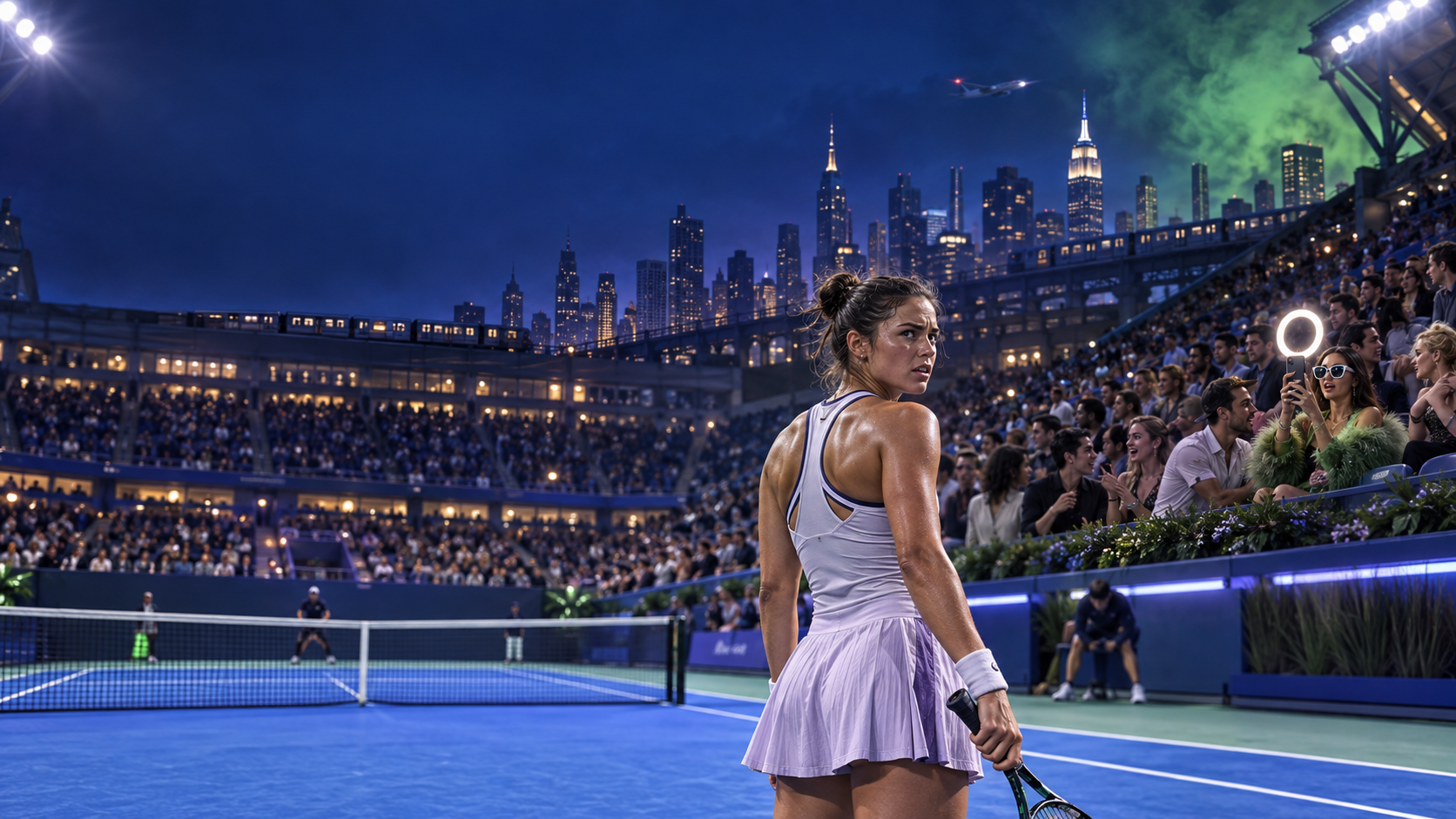
Weed, Ring Lights and Mid-Point Talking: Has the US Open Become Too Distracting?
Weed, Ring Lights and Mid-Point Talking: Has the US Open Become Too Distracting? The US Open has always been tennis…
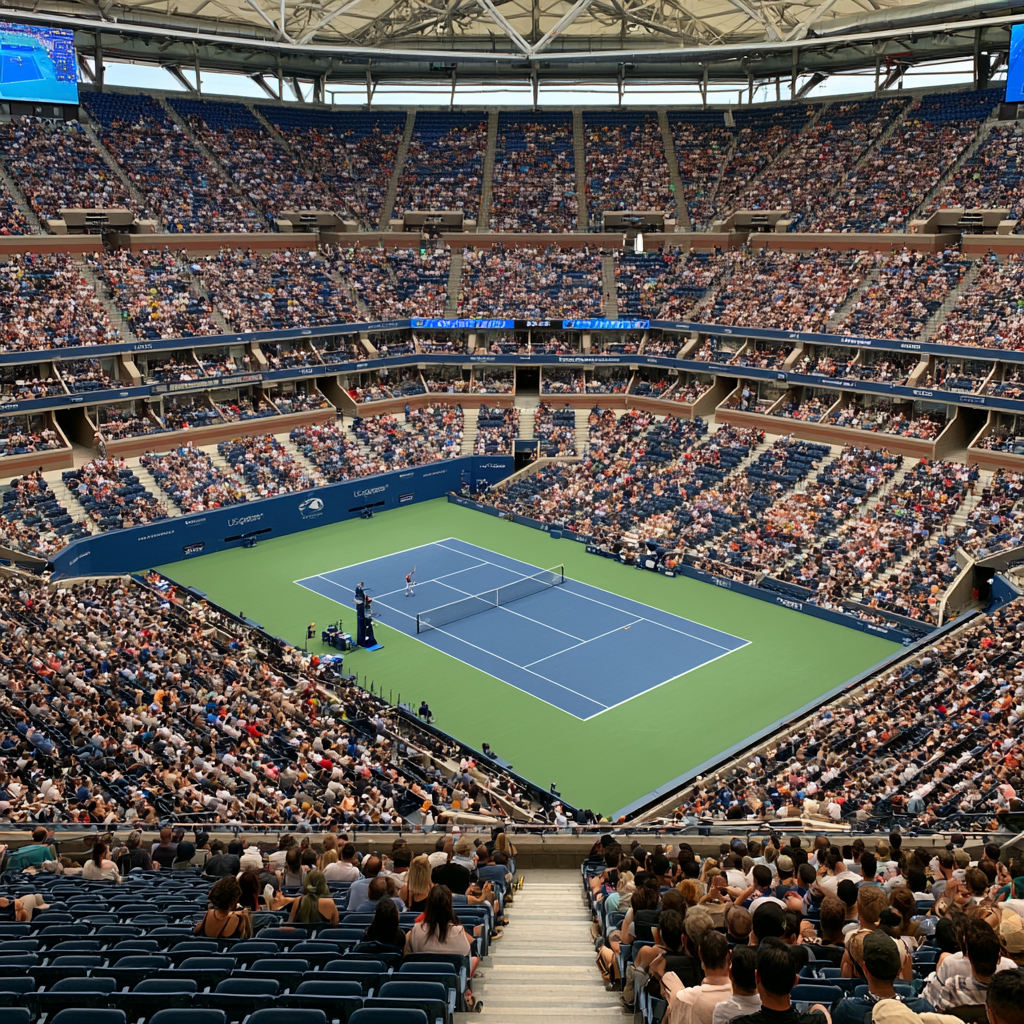
The U.S. Open’s First Lesson: Talent Wins Points—Energy Wins Tournaments
The U.S. Open’s First Lesson: Talent Wins Points—Energy Wins Tournaments By Rich Benvin Opening day at the U.S. Open gave…

Ace Court Tennis Game: The Fastest Way to Test Your Tennis Skills
Ace Court Tennis Game: The Fastest Way to Test Your Tennis Skills Think your tennis IQ is as sharp as…